
Today, when most people think of Lebanon, they only see collapse. And while that’s not wrong, it’s an incomplete picture.
There’s a Lebanon that rarely makes the news: a Lebanon that’s been stubbornly holding space for Christian faith in one of the most fraught regions on Earth.
A country unlike any other
Lebanon is small. Roughly the size of Connecticut, it’s tucked between Syria to the northeast, Israel to the south, and the Mediterranean to the west. But its significance to the Church is disproportionate to its geography.
Lebanon has the largest Christian population of any country in the Arab Middle East. The Maronite Church, one of the oldest Christian traditions in the world, has called its mountains home for over fifteen centuries. There are ancient monasteries carved into caves and cliff faces and villages where Aramaic, the language that Jesus himself spoke, has been passed down for generations.
For believers in a region where the Christian faith is often invisible, if not oppressed, Lebanon is something rare: a place where it’s possible to live openly as a follower of Jesus.
A refuge for those with nowhere else to go
When the Syrian civil war began in 2011 and millions of people were forced from their homes, many persecuted Christians fled across the border to Lebanon.
Lebanon had open laws, a history of receiving displaced people, and a Christian community that could receive them. Iraq’s displaced believers came too, fleeing ISIS as it tore through ancient Christian communities that were scattered for the first time in two thousand years.
For many reasons I won’t go into here, Lebanon has been stretched thin in almost every way. It was navigating a broken economy, fractured government, and the weight of hosting one of the largest refugee populations in the world per capita.
However, despite its pain, Lebanon has also been one of the most significant centers of Christian witness and hospitality in the Middle East for decades.
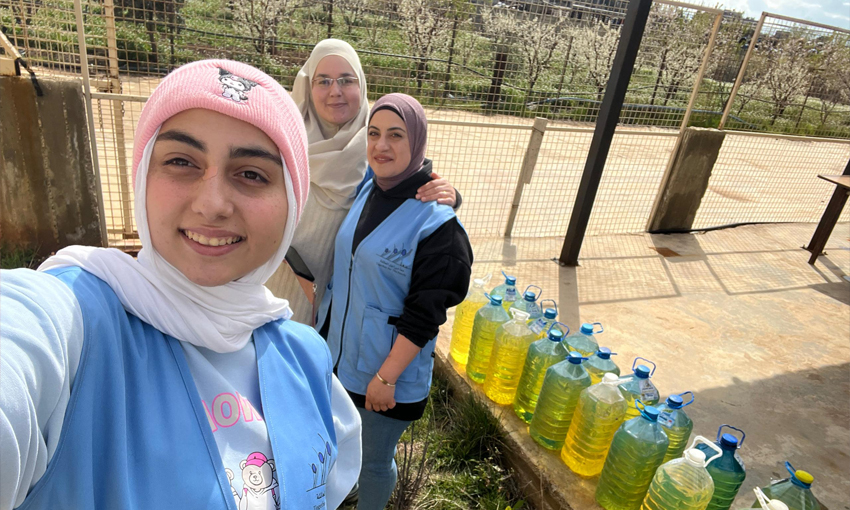
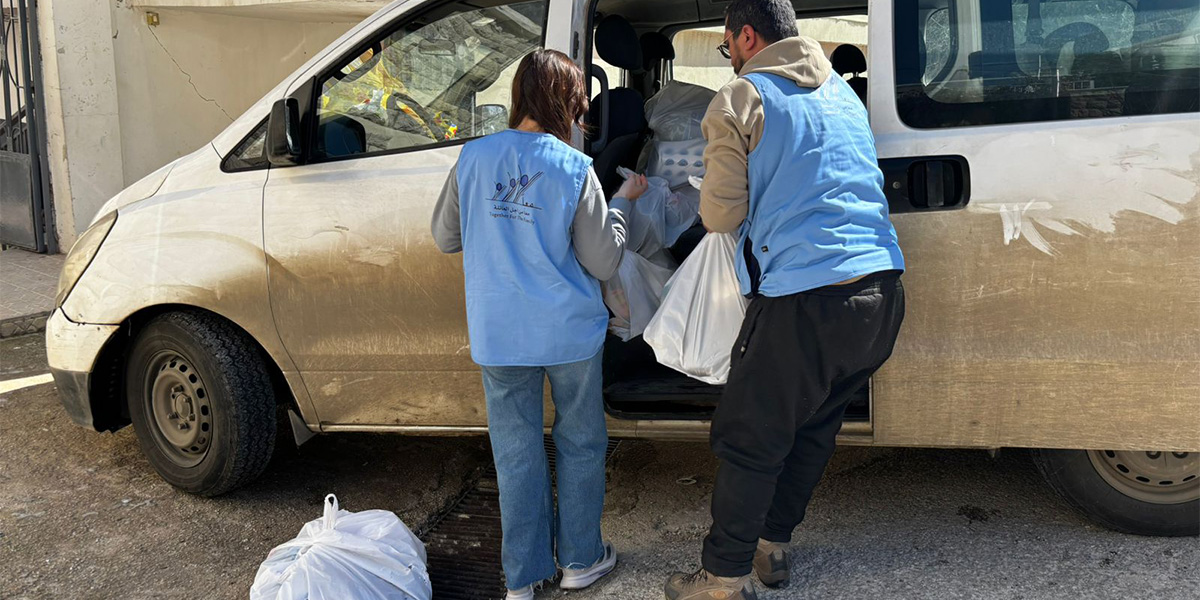
The local partners Open Eyes works with didn’t wait for stability before doing ministry. They’ve been serving their Lebanese, Syrian, Iraqi, and Palestinian neighbors year after year, decade after decade, opening their church buildings—and even their homes—to people in desperate need of a safe place to just…be.
Why this moment is different
What we’re seeing now isn’t just a continuation of pain and difficulty. The combination of economic collapse, political paralysis, and brutal conflict is building pressure in a way our partners are struggling to absorb.
Our local partners in Lebanon are depleted. They are running out of space, running out of food, and running low on the inner emotional resources they need to keep going at this pace.
Isaiah promised that those who hope in the Lord will renew their strength. Our partners are living in that hope, but they need the body of Christ to stand with them.
I firmly believe we are being shown an opportunity to show up in a big way for Lebanon. Scripture tells us that God is able to bless abundantly, so that in all things at all times, having all that we need, we will abound in every good work.
That promise belongs to this moment. God’s resources never run dry, and neither does his call to pour them out.