
When a place shows up in your news feed every day, it can start to feel like a story. Statistics, maps, political analysis—something happening over there.
But Lebanon isn’t just a story to us.
It’s a place we’ve been invested in for years, through ministry partners who are dear friends. So, when the situation there began to intensify, we were not watching from a distance through the news. We were anxiously receiving calls, text messages, and emails from people we care about.
Lebanon is where we started our engagement in the Middle East. It has relatively open laws, a willingness to receive refugees, and one of the largest Christian communities in the region. For persecuted believers fleeing Syria, Iraq, and beyond, Lebanon has been a rare safe haven.
That refuge is now under enormous strain.
To understand Lebanon, you have to understand Syria
The Syrian civil war began in 2011 with peaceful protests—people asking for more freedom, less corruption, and a better future. The Assad regime responded with brute force. Protests caught fire and became uprisings. Uprisings became a war that has now ground on for over 14 years, killing hundreds of thousands and displacing millions more.
While the situation in Syria has shifted in recent years, conditions on the ground remain unstable. Millions remain entirely dependent on humanitarian aid. There is no clear frontline. And there’s no straightforward path to peace. People like you and me are caught in the middle of shifting power, not knowing where it’s safe to go.
Amazingly, most Syrian refugees have stayed in the region. Lebanon, Jordan, and Turkey together host the vast majority of them. Lebanon, with its religious diversity and complex political structure, has provided space for many refugees to live, including large numbers of Christians. As a result, it has become home to a vast displaced population layered on top of its own already fragile reality.
Unfortunately, that reality has been fracturing for some time
Living on a fault line
Lebanon was not a stable country before this current escalation. It has been navigating economic collapse, political paralysis, and the weight of hosting one of the largest refugee populations in the world, all at once.
I want you to hear what some of our partners in the area were telling us as the situation intensified in recent weeks:
“A warning has just been issued to residents of Beirut’s suburbs [telling us] to evacuate towards Mount Lebanon. People are opening their windows and balcony doors, so they don’t break from the blast sounds. Entire towns are leaving, and roads are heavily blocked as families flee the city using only two main highways.”
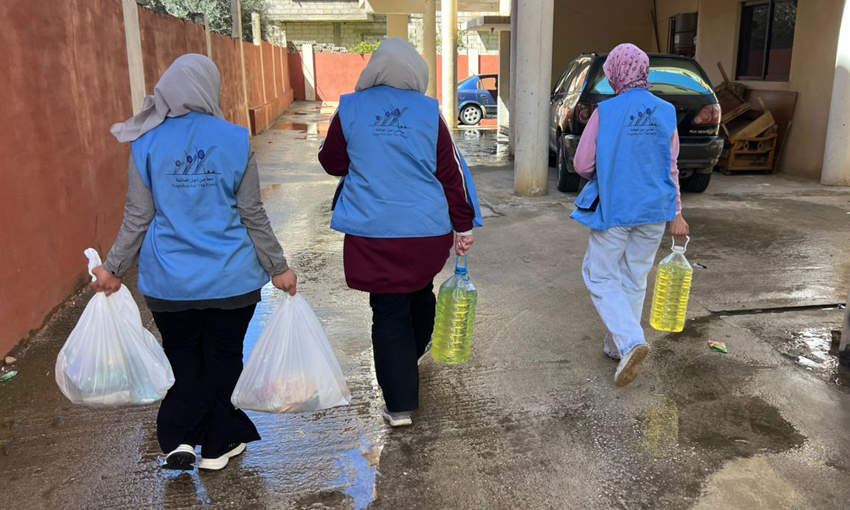
Right now, hundreds of displaced Lebanese and Syrian individuals from the area are being hosted in church members’ homes, receiving shelter and fellowship. Many of these locations have already reached full capacity, but daily outreach continues through food parcels, hot meals, and hygiene kits given to families who are staying on the streets.
The reality is hard and complex, but our heart remains the same: to serve faithfully and be a steady presence for both Lebanese and refugee communities alike.
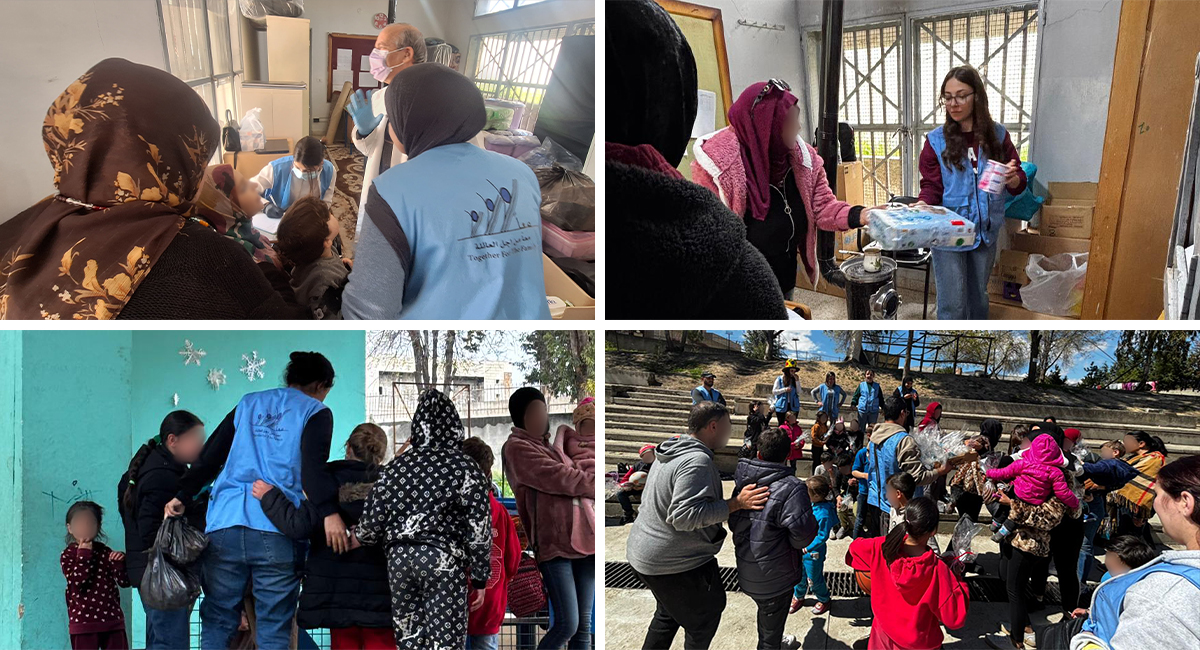
Faces blurred for security reasons
Caring for the hurting to the ends of the earth
I want to say something about the broader context, because it matters: the Middle East is experiencing ongoing conflict and instability across multiple fronts. These dynamics have contributed to displacement, fear, and uncertainty for millions of people, including those in Lebanon.
However, we believe our mandate is to care for the hurting to the ends of the earth, regardless of nationality, ethnicity, or which side of a border someone calls home. We do this not because it is politically convenient, but because it reflects the heart of God.
Amid this suffering, we hold onto the words of Isaiah:
“He will judge between the nations
and will settle disputes for many peoples.
They will beat their swords into plowshares
and their spears into pruning hooks.
Nation will not take up sword against nation,
nor will they train for war anymore.”Isaiah 2:4
That day is coming. Until it does, we extend our hands to those in need.
Open Eyes does not just show up in a crisis and leave
What we’re seeing in Lebanon right now is something we’ve observed again and again in places of prolonged crisis: disruption opens people up. When the structures people rely on—income, home, a sense of the future—are stripped away, the deep questions surface.
What does my life mean? Where do I belong? Is there any hope?
Our friends are walking closely with families facing complex and deeply personal decisions about their future. It calls us to remain present, to offer both practical support and spiritual care, and to continue being a place of stability for people navigating uncertainty.
Long after the news cycle moves on, our partners in Lebanon will still be there distributing food, opening their homes, sitting with people in the hardest moments of their lives.
If this has stirred something in you, stay close
Follow what we’re doing. Pray with us. And if you’re able, give, knowing that your generosity is going directly to people who are already trusted, already present, already doing the work.
You do not have to be a bystander to what’s happening in Lebanon. None of us do.